

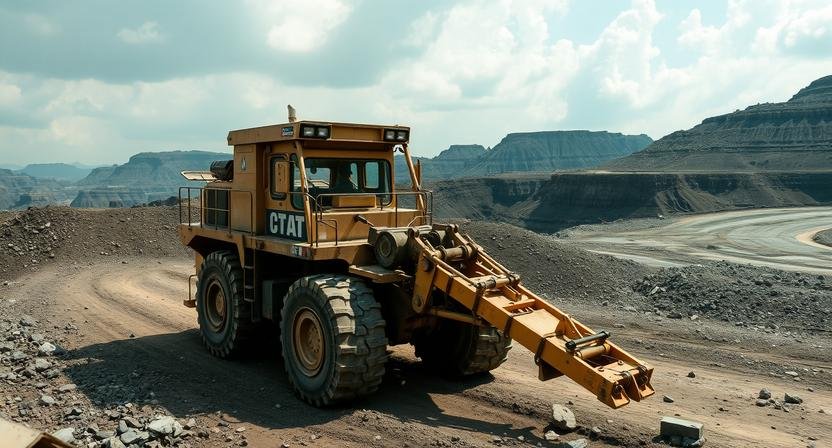
Illegal mining is a growing challenge in the Baddi-Barotiwala-Nalagarh (BBN) industrial belt, an area spanning parts of Himachal Pradesh in northern India that is home to a rapidly expanding industrial corridor. Once primarily known for manufacturing, the BBN region has in recent years increasingly faced a parallel problem: a surge in unregulated quarrying and mineral extraction.
This illicit activity has significant implications for law enforcement, environmental sustainability, local communities, and regional development. Understanding why illegal mining has escalated here — and how authorities are responding — is essential for residents, policymakers, environmental advocates, and investors alike.
Read Also: Multi-Axle Trailer Overturns on Siswan-Baddi Highway, Traffic Disrupted
What Is Illegal Mining and Why It Matters
Illegal mining refers to mineral extraction that’s carried out without the necessary legal permissions, oversight, or adherence to environmental safeguards. In the context of the BBN belt, this includes quarrying of riverbed materials such as sand, stone, and gravel without licenses, operating outside regulated hours, and transporting illegally mined materials across state borders for profit. Such activity matters because it directly undermines regulated mining systems, deprives governments of revenue, fuels black markets, and accelerates environmental degradation that can affect ecosystems and human health.
Illegal mining isn’t unique to BBN; similar challenges have been documented in other parts of South Asia, including unregulated gold extraction in river belts in Pakistan’s provinces, where authorities have had to impose bans and enforce Section 144 to curb riverbank mining that harms natural systems.
The BBN Belt: Regional Overview
The BBN industrial belt comprises three adjoining regions: Baddi, Barotiwala, and Nalagarh. It has emerged over the last two decades as a major industrial hub, attracting textile, pharmaceutical, and manufacturing enterprises. The economic boom has brought jobs and investment, but it has also intensified demand for construction materials like sand and stone. This demand, coupled with accessible riverbeds and weak enforcement at certain local stretches, has created fertile ground for illegal mining operations.
In recent months, the scale of the problem has become clear to local authorities and observers. Police and mining officials have registered multiple cases against offenders and seized vehicles and equipment used predominantly for unlicensed quarrying.
Profit Incentives Behind Illegal Mining
There are several economic factors that drive individuals and syndicates toward illegal extraction:
- High demand for construction materials from booming infrastructure projects.
- Price arbitrage from selling to neighboring states such as Haryana and Punjab where demand and prices can be higher.
- Low barriers to entry for small operators with tractors or mini-trucks who can extract and transport materials with minimal upfront investment.
- Weak detection mechanisms in remote riverbed areas, especially after daylight hours when monitoring is sparse.
These incentives encourage large numbers of unregulated actors to enter the market, often organized loosely with local intermediaries.
Law Enforcement Response in BBN
Recognizing the escalating problem, local police and district authorities have intensified enforcement efforts to curb illegal mining. Recent actions include:
- Registration of numerous cases under the Mining Act against those engaged in unlicensed extraction.
- Impounding of vehicles used for transporting illegally mined materials, especially tractors and mini-trucks operating without proper registration plates.
- Seizure of earthmoving machinery and excavation equipment that enable extraction.
- Issuance of monetary challans (penalties) to vehicles and operators violating mining and traffic regulations.
These enforcement measures are intended to disrupt the supply chains used by illegal miners and discourage further unpermitted activity through financial and legal consequences.
Challenges Faced by Police
Despite these actions, enforcement teams encounter significant hurdles:
- Many operators avoid registration or remove license plates to evade detection.
- Illicit mining often occurs after sunset and in remote areas where surveillance is limited.
- There have been reports of resistance and attacks on police during operations, indicating the presence of organized interests.
To strengthen monitoring, authorities are considering expanded use of technology such as CCTV networks, drone surveillance, and automatic number-plate recognition systems — strategies piloted in other regions to detect and intercept illegal extraction and transportation in real time.
Environmental and Social Impacts
The environmental consequences of illegal mining in the BBN region are severe and multifaceted:
Erosion and Riverbank Instability
Unregulated extraction from riverbeds destabilizes banks, leading to:
- Soil erosion
- Changes in natural water courses
- Increased risk of flooding during monsoon seasons
These impacts threaten agricultural lands, infrastructure, and local communities that depend on stable water systems.
Loss of Biodiversity
River ecosystems support fish, plant life, and wildlife. Disrupting riverbeds degrades these habitats, reducing biodiversity and affecting livelihoods that depend on healthy ecological systems.
Air and Noise Pollution
Heavy machinery operating illegally often lacks proper emission controls. The resulting dust and noise contribute to air pollution, affecting respiratory health in nearby residential areas.
Economic Disparities
Local workers drawn into illegal mining often lack safety training and social protections, working under informal conditions that expose them to hazards without legal safeguards. Moreover, governments lose revenue that could have been reinvested in community development and environmental protection had the activities been licensed and regulated.
Broader Policy and Regulatory Context
The issue of illegal mining in BBN must be viewed within the wider regulatory environment governing mineral extraction. Across India and neighboring regions, authorities are seeking to tighten frameworks to prevent illegal exploitation of natural resources. For example, in Himachal Pradesh, the government has formed flying squads and increased FIRs against offenders in the BBN area to tackle cross-border illegal mining activity.
Similarly, jurisdictions outside India have taken steps such as banning illegal riverbank mining under emergency provisions to protect ecosystems. In Pakistan’s Khyber Pakhtunkhwa province, authorities invoked Section 144 to strictly prohibit gold mining along certain riverbanks and authorized police to seize equipment and pursue violators — a measure designed to protect the environment and enforce the law.
These examples highlight a trend toward more robust regulatory responses, though the effectiveness of these measures depends on clear laws, adequate resources for enforcement, and strong political will.
Community and Stakeholder Engagement
Effective mitigation of illegal mining requires collaboration among multiple stakeholders:
Local Communities
Resident groups and environmental organizations can help monitor sensitive sites, report violations, and advocate for sustainable practices. Community-led watch schemes have succeeded in some regions by acting as additional eyes on the ground where official surveillance is limited.
Industry Associations
The industrial stakeholders in BBN have an interest in ensuring responsible mining practices. Collaboration with government agencies can support better oversight and reduce the advantages that illegal operators currently exploit.
Environmental Advocates
Non-government organizations and scientific experts can inform policymakers on the ecological impacts of mining, propose restoration strategies for degraded areas, and help design monitoring protocols that balance economic needs with environmental preservation.
Future Outlook
Addressing the surge in illegal mining in the BBN belt requires sustained, multi-pronged strategies:
- Continued and improved law enforcement to deter and prosecute offenders.
- Investment in surveillance technologies that extend monitoring capabilities beyond daylight hours and difficult terrain.
- Clearer legal frameworks and penalties that remove ambiguity in enforcement and strengthen deterrence.
- Support for economic alternatives for individuals drawn to illicit mining due to limited employment options.
While progress has been made through recent police crackdowns and case registrations, long-term solutions must integrate environmental protection goals with socio-economic development initiatives. Policymakers and communities alike must recognize that the costs of unchecked mining — from ecological damage to loss of public trust — far outweigh the short-term gains accrued by illegal operators.
Conclusion
The illegal mining surge in the BBN belt is not just a law enforcement issue — it’s a complex challenge at the intersection of economic incentives, environmental stewardship, and regulatory capacity. Authorities have stepped up efforts to crack down on unlicensed extraction, but the persistence of illegal mining highlights the need for stronger policies, better enforcement technology, and closer collaboration with local stakeholders.