

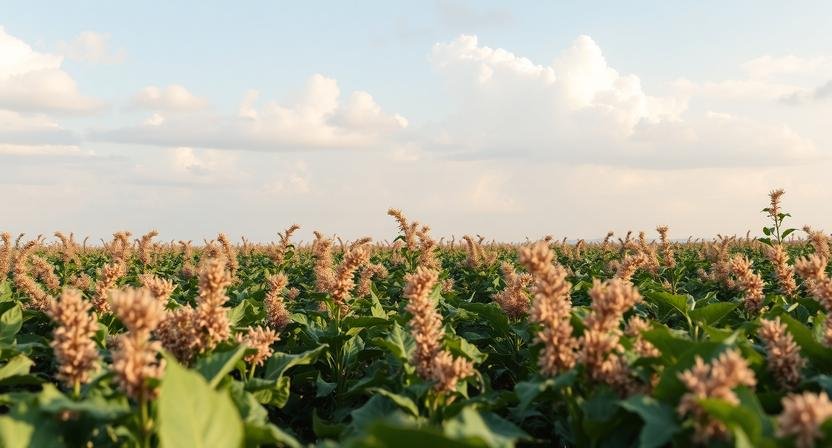
The agricultural sector is facing an alarming challenge as BBN crops, a staple in many regions, are being decimated by a mysterious disease. Farmers and agronomists alike are grappling with sudden crop failures, threatening food security and economic stability.
This issue has gained significant attention because it affects not only yield but also the livelihoods of thousands who depend on BBN farming. Understanding the nature of this disease, its impact, and potential strategies for mitigation is crucial for sustaining the agricultural ecosystem.
Read Also: Baddi’s Transport Crisis: How Workers Are Coping Without Good Public Transit
What Are BBN Crops?
BBN crops refer to a group of high-yield agricultural plants cultivated primarily for both food and commercial purposes. These crops are valued for their nutritional content, adaptability, and economic potential. Regions that rely heavily on BBN cultivation have seen these crops form the backbone of their agricultural output. Because of their importance, any threat to BBN crops has far-reaching consequences, affecting everything from local markets to international trade.
Symptoms of the Mysterious Disease
Farmers have reported unusual patterns of crop decline that do not match any known plant diseases. Early signs include yellowing of leaves, stunted growth, and irregular fruit development. As the disease progresses, entire fields can appear withered, and the plants fail to produce viable yields. Unlike common fungal or bacterial infections, this disease spreads rapidly, sometimes bypassing typical pest control measures. The unusual symptoms have made diagnosis challenging, prompting research institutions to prioritize investigations into the pathogen’s origin.
Causes and Possible Origins
Although the exact cause of the disease is still under investigation, several hypotheses have emerged. Experts are considering environmental stressors, soil degradation, and genetic vulnerabilities in BBN crops as contributing factors. Some researchers suggest that changing climate patterns, including increased humidity and fluctuating temperatures, may create favorable conditions for the disease to thrive. Additionally, there is speculation that a previously unidentified pathogen—possibly viral or fungal—could be responsible, given the disease’s atypical progression and high transmissibility.
Recent Trends and Spread Patterns
Reports indicate that the mysterious disease is not confined to a single region. In the last few months, outbreaks have been documented across multiple agricultural zones, with some areas experiencing losses exceeding 40% of their BBN yield. Satellite imaging and field surveys have revealed that the disease spreads more aggressively in monoculture farms, where genetic uniformity makes plants more susceptible to novel pathogens. Trends also show a correlation between high rainfall seasons and rapid disease proliferation, highlighting the complex interplay of environmental and biological factors.
Economic and Social Impact
The destruction of BBN crops has profound economic repercussions. Farmers face reduced income, while local markets struggle with supply shortages. Food prices can rise dramatically, affecting consumers and creating broader social challenges. In regions where BBN crops are a primary food source, crop failure can lead to nutritional deficits, particularly among vulnerable populations. The social implications extend beyond the farm, influencing employment, rural livelihoods, and regional economic stability.
Strategies for Disease Management
Combating this mysterious disease requires a multifaceted approach. Experts recommend implementing rigorous crop monitoring to detect early symptoms, which can significantly reduce spread. Soil health management, including proper fertilization and crop rotation, may improve plant resilience. In parallel, research into disease-resistant BBN varieties is underway, offering hope for long-term mitigation. Farmers are also encouraged to adopt integrated pest and disease management practices, combining biological controls with environmentally safe chemical treatments when necessary.
Importance of Research and Collaboration
Addressing this crisis demands collaboration between government agencies, research institutions, and farmers. Accurate disease identification and the development of effective treatments depend on shared data and field observations. Collaborative research can also accelerate the breeding of resistant BBN crop varieties, reducing vulnerability in future planting seasons. Public awareness campaigns can educate farmers on best practices, including hygiene measures to prevent pathogen spread and timely reporting of disease outbreaks.
Technological Interventions
Emerging technologies are playing an increasingly important role in combating plant diseases. Remote sensing, drones, and AI-driven analytics allow for real-time monitoring of crop health and early detection of anomalies. Digital platforms enable farmers to access expert guidance, report outbreaks, and receive updates on effective control measures. Leveraging these technologies can help minimize losses and improve response times, giving farmers a better chance to protect their crops.
Challenges in Containing the Disease
Despite efforts to manage the outbreak, several challenges persist. The disease’s unknown origin complicates treatment strategies, and over-reliance on chemical interventions could harm soil ecosystems. Additionally, smallholder farmers often lack resources to implement advanced disease management techniques, leaving them particularly vulnerable. Climate variability further complicates containment, as shifting environmental conditions may exacerbate pathogen spread or reduce the effectiveness of traditional control methods.
Future Outlook
While the situation is critical, ongoing research and coordinated interventions provide hope for containment. Scientists are optimistic that identifying the causal agent will pave the way for targeted solutions, including resistant crop strains and effective treatment protocols. In the long term, diversifying crops, improving soil management, and investing in agricultural technology will strengthen resilience against similar threats. Farmers, policymakers, and researchers must work together to ensure that BBN cultivation can recover and continue to sustain communities economically and nutritionally.
Conclusion
The mysterious disease devastating BBN crops represents a serious threat to agriculture, food security, and rural livelihoods. Early detection, effective management strategies, and collaborative research are essential to mitigating its impact. While challenges remain, a combination of scientific innovation, technological adoption, and proactive farming practices offers a path forward.