

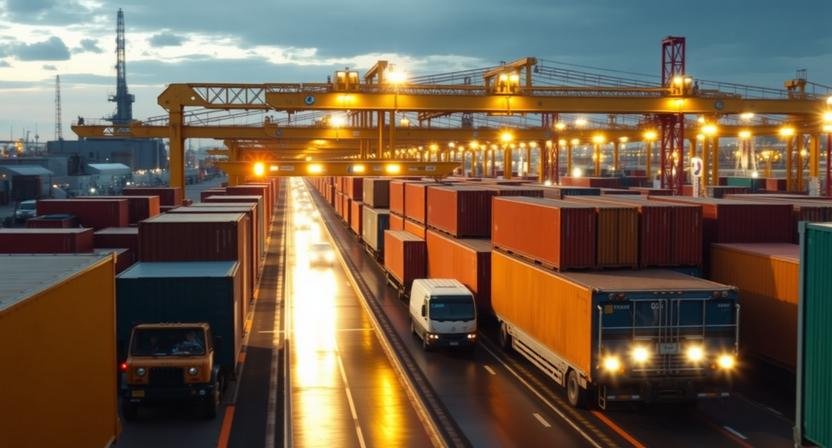
The BBN Industrial Region has emerged as one of the most dynamic manufacturing hubs in recent years, attracting both domestic and international investors. Its strategic location, abundant labor force, and access to raw materials have positioned it as a promising center for industrial growth.
However, beneath its apparent potential, the region faces persistent challenges that threaten to slow down its expansion. Chief among these are inadequate infrastructure and soaring logistics costs, issues that have become central to discussions about the future competitiveness of BBN-based industries.
Understanding these challenges is essential for businesses, policymakers, and investors seeking to navigate the complexities of industrial operations in the area.
Read Also: BBN Region Residents Raise Concerns Over Pollution and Living Conditions
The Role of Infrastructure in Industrial Growth
Infrastructure forms the backbone of any industrial region. Roads, railways, ports, electricity, and telecommunications all play crucial roles in determining operational efficiency and cost-effectiveness. In BBN, while certain industrial zones boast well-planned layouts and modern facilities, many areas remain underdeveloped. Narrow or poorly maintained roads, inconsistent power supply, and insufficient connectivity between industrial parks and key transport hubs often slow production cycles.
Reliable infrastructure is not just a convenience; it directly impacts the bottom line. Delays caused by bad roads or power outages increase production costs, reduce output, and undermine competitiveness. For industries relying on just-in-time manufacturing or rapid distribution, these issues are particularly acute. Businesses in BBN frequently report that while labor and land may be cost-effective, infrastructure deficits make up for these savings through higher operational risks.
Power Supply and Energy Challenges
One of the most pressing infrastructure concerns in BBN is energy reliability. Industrial operations require stable electricity to run heavy machinery, maintain temperature-sensitive production lines, and support logistics systems. Frequent power fluctuations and limited access to renewable energy sources force many factories to rely on backup generators, adding to operational costs. While local authorities have initiated power infrastructure projects, the pace of implementation often lags behind industrial growth, creating a persistent gap between demand and supply.
Transportation Bottlenecks
Transportation infrastructure, particularly road and rail networks, significantly influences logistics efficiency. In BBN, the expansion of roads has not kept pace with the surge in industrial activity, leading to congestion and delays in freight movement. Similarly, rail connectivity exists in certain zones but is underutilized due to outdated facilities or limited cargo handling capacities. This fragmentation increases dependency on road transport, which is costlier over long distances and more vulnerable to disruption.
The Rising Costs of Logistics
High logistics costs have emerged as a critical challenge for businesses operating in BBN. Efficient supply chain management is vital for industries that deal with perishable goods, high-volume exports, or time-sensitive deliveries. However, the combination of inadequate infrastructure, rising fuel prices, and fragmented freight systems has made logistics a major expense.
Fuel and Transportation Expenses
Fuel constitutes a substantial portion of logistics costs. In BBN, road freight remains the dominant mode of cargo movement due to limited rail and port access. With rising diesel prices and poorly maintained highways, transport companies face escalating expenses that are often passed on to manufacturers. These added costs make products less competitive in both domestic and international markets, particularly for small and medium-sized enterprises that lack the economies of scale enjoyed by larger corporations.
Supply Chain Inefficiencies
Inefficiencies in the local supply chain further exacerbate logistics costs. Poor coordination between suppliers, manufacturers, and distributors leads to delays, redundant trips, and underutilized transport capacity. For example, industrial materials may sit idle at warehouses due to mismatched schedules or inadequate storage, increasing holding costs and reducing turnover rates. Streamlining these operations requires not only better infrastructure but also investment in technology, such as automated logistics platforms and real-time tracking systems.
Recent Trends and Initiatives
Despite these challenges, BBN has witnessed proactive measures aimed at improving industrial efficiency and reducing logistics burdens. Public-private partnerships are increasingly common, with government agencies collaborating with logistics providers and industrial associations to upgrade infrastructure. New road expansions, port modernization projects, and industrial park enhancements are gradually easing transportation bottlenecks.
Emphasis on Technology Integration
Digital solutions are playing an increasingly important role in mitigating logistics challenges. Companies in BBN are adopting inventory management software, route optimization tools, and predictive analytics to reduce delays and cost overruns. Technology-driven logistics not only minimizes reliance on flawed infrastructure but also improves transparency, allowing manufacturers to respond quickly to disruptions and plan for contingencies.
Policy and Incentive Programs
Government policies aimed at incentivizing industrial growth are also impacting the region’s logistical landscape. Tax breaks for infrastructure investment, grants for energy-efficient equipment, and subsidies for green transport solutions are encouraging businesses to modernize operations. While these measures do not eliminate structural issues overnight, they create an environment in which long-term improvements are achievable.
The Human Factor: Workforce and Skill Development
Infrastructure and logistics challenges are compounded by workforce issues. Efficient operations require skilled personnel to manage machinery, oversee supply chains, and implement technology solutions. In BBN, rapid industrialization has outpaced the availability of specialized training programs, leading to skill gaps in logistics management, maintenance, and quality control. Addressing these gaps through vocational training, apprenticeships, and industry-academia collaboration is critical for reducing inefficiencies and optimizing costs.
The Competitive Impact on Industries
High infrastructure and logistics costs directly affect competitiveness in BBN. Businesses face reduced profit margins, delayed deliveries, and limited flexibility to scale operations. For export-oriented industries, these factors are especially damaging, as global clients expect timely deliveries at competitive prices. Some companies are relocating certain operations to regions with more reliable infrastructure, while others are investing heavily in private logistics solutions to bypass local constraints.
Opportunities Amid Challenges
Despite these hurdles, BBN’s industrial potential remains significant. Proactive investment in infrastructure, technology, and workforce development can transform the region into a more efficient and cost-effective hub. Moreover, industries that adapt quickly—through automation, digital logistics, and strategic partnerships—can gain a competitive advantage over slower-moving rivals.
Conclusion
The BBN Industrial Region illustrates a familiar paradox in emerging industrial hubs: immense growth potential constrained by infrastructure limitations and high logistics costs. Addressing these challenges requires a multifaceted approach that includes upgrading transportation and energy systems, integrating digital supply chain solutions, and enhancing workforce skills.